Introduction
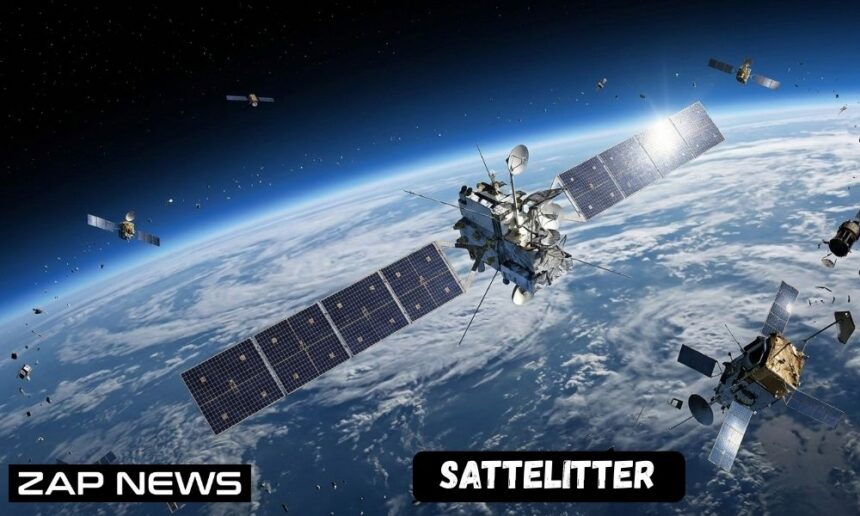
Have you ever looked up at the sky and wondered how your phone connects to someone thousands of miles away in seconds? Most people think immediately of satellites orbiting far above Earth. But a new concept is quietly reshaping how we think about connectivity, observation, and global communication: the sattelitter.
At first glance, the word sattelitter seems like a spelling mistake. However, the idea behind a sattelitter represents something much broader than traditional satellites. A sattelitter is a modern, adaptive, and often closer-to-Earth system that performs satellite-like functions — such as communication, monitoring, mapping, and data transmission — without always operating in outer space.
In this comprehensive guide, you’ll discover what a sattelitter truly means, how it evolved from classic satellite systems, the different types in use today, their real-world applications, challenges, environmental impact, and what the future holds for this rapidly emerging technology.
What Is a Sattelitter?
A sattelitter is a next-generation satellite-like system designed to deliver communication, surveillance, data collection, and environmental monitoring services. Unlike traditional satellites that orbit Earth in space, a sattelitter may operate within the atmosphere, near the surface, or across hybrid networks combining space and terrestrial systems.
Traditional satellites function in orbits such as:
-
Low Earth Orbit (LEO)
-
Medium Earth Orbit (MEO)
-
Geostationary Orbit (GEO)
A sattelitter expands beyond that framework. It may include:
-
High-altitude solar drones
-
Stratospheric balloons
-
AI-powered ground sensor networks
-
Ocean-based monitoring buoys
-
Hybrid communication systems
The key distinction is flexibility. A sattelitter is designed to be faster to deploy, more affordable, closer to users, and often decentralized. Instead of depending solely on expensive rocket launches and fixed orbital paths, sattelitters can be positioned strategically based on demand.
The Evolution from Satellite to Sattelitter
To understand the rise of the sattelitter, we must look at history.
In 1957, the Soviet Union launched Sputnik 1, the first artificial satellite. This moment marked the beginning of the space age. Over the next decades, satellite technology advanced dramatically, supporting GPS navigation, live television, global internet backbones, weather forecasting, and military intelligence.
However, traditional satellites come with limitations:
-
Extremely high launch costs
-
Long development timelines
-
Complex regulations
-
Limited flexibility once in orbit
By the early 21st century, new demands emerged:
-
Real-time global communication
-
Smart agriculture
-
Disaster monitoring
-
Remote education access
-
Expanding IoT ecosystems
This demand for agility and scalability sparked innovation. Engineers began developing high-altitude pseudo-satellites (HAPS), CubeSats, edge computing sensors, and solar-powered drones. Collectively, these systems laid the foundation for what we now call the sattelitter ecosystem.
Types of Sattelitters
Sattelitters are not one single device. They represent a category of technologies performing satellite-like functions in diverse environments.
1. High-Altitude Pseudo Satellites (HAPS)
These include solar-powered drones and stratospheric balloons operating above commercial air traffic but below space. One famous example was Project Loon, which used balloons to provide internet connectivity in remote regions.
HAPS systems can remain airborne for weeks or months, offering communication coverage without needing orbital infrastructure.
2. Smart Ground Sensor Networks
In smart cities, sattelitters exist on the ground. AI-powered sensors track:
-
Traffic congestion
-
Air pollution levels
-
Public safety alerts
-
Infrastructure stress
These distributed systems form a decentralized sattelitter grid that delivers real-time environmental data.
3. Maritime Monitoring Systems
Ocean-based sattelitters include intelligent buoys that monitor:
-
Sea temperature
-
Storm formation
-
Marine biodiversity
-
Shipping routes
These floating systems help researchers and governments gather ocean data faster and more efficiently than relying only on space-based observation.
4. Hybrid Space-Earth Systems
Modern connectivity increasingly relies on hybrid architecture. For example, Starlink combines low Earth orbit satellites with ground terminals and networking infrastructure.
This hybrid structure reflects the sattelitter concept — blending space-based systems with adaptable, Earth-adjacent technology to maximize performance and accessibility.
How Sattelitters Work
Although sattelitters differ in structure, they operate under the same fundamental principles:
-
Data Collection – Using sensors, cameras, radar, or environmental detectors.
-
Processing – Often using onboard AI or edge computing.
-
Transmission – Sending information via radio frequency, laser communication, or mesh networks.
One major advantage of a sattelitter is low latency. Because many sattelitters operate closer to Earth than traditional satellites, they transmit information faster, making them ideal for:
-
Emergency response
-
Financial data systems
-
Remote medical support
-
Live navigation services
Many sattelitters rely on renewable energy such as solar power, improving operational longevity and sustainability.
Key Differences: Satellite vs. Sattelitter
Understanding the differences highlights why the sattelitter model is gaining attention.
| Feature | Satellite | Sattelitter |
|---|---|---|
| Location | Outer space orbit | Atmosphere, surface, or hybrid |
| Cost | Extremely high | Lower and scalable |
| Deployment | Rocket launch required | Drone, balloon, or ground install |
| Flexibility | Fixed orbit | Mobile and adaptable |
| Ownership | Governments & corporations | Startups, research labs, communities |
| Latency | Higher | Lower |
While satellites remain essential, the sattelitter offers complementary advantages in responsiveness and accessibility.
Real-World Applications of Sattelitters
Sattelitters are already influencing multiple industries.
Global Internet Access
Sattelitters help bridge the digital divide by delivering connectivity to rural and isolated areas. Hybrid networks combining satellites and ground nodes enable affordable broadband access worldwide.
Smart Cities
Urban planners deploy sattelitter networks to:
-
Monitor traffic patterns
-
Improve emergency response times
-
Track pollution
-
Enhance infrastructure efficiency
Agriculture
Farmers use drone-based sattelitters to monitor:
-
Soil moisture
-
Crop health
-
Pest outbreaks
-
Irrigation efficiency
This precision farming reduces waste and increases sustainability.
Environmental Monitoring
Sattelitters track:
-
Deforestation
-
Glacier melt
-
Sea-level rise
-
Wildlife migration
Real-time data improves climate action planning.
Disaster Response
During earthquakes, floods, or hurricanes, sattelitters provide rapid aerial imaging and communication services, supporting rescue operations.
Privacy and Ethical Concerns
Despite their benefits, sattelitters raise legitimate concerns.
Because many sattelitters use high-resolution imaging and AI-based monitoring, questions arise regarding:
-
Data ownership
-
Surveillance risks
-
Transparency
-
Regulatory oversight
Unlike traditional satellites governed by established space treaties, sattelitters operate in regulatory gray areas. Laws written for space-based systems may not fully apply to high-altitude drones or decentralized sensor grids.
Balancing innovation with privacy protections will be essential as sattelitters become more embedded in daily life.
Technical and Environmental Challenges
Sattelitters also face obstacles.
Airspace Congestion
As more drones and balloons occupy high altitudes, collision risks increase.
Power Limitations
Long-duration operation requires highly efficient batteries and solar systems.
Environmental Impact
Although sattelitters can support environmental protection, they may:
-
Disrupt bird migration
-
Create noise pollution
-
Generate electronic waste
Sustainable design is becoming a priority to ensure sattelitter technology remains environmentally responsible.
Governance and Global Regulation
Current international treaties focus primarily on outer space. However, sattelitters operate in shared airspace and territorial waters, raising new governance challenges.
Key questions include:
-
Who controls atmospheric sattelitters?
-
Should global registries be created?
-
How is cross-border data regulated?
International cooperation between governments, companies, and research institutions will be necessary to prevent misuse while encouraging innovation.
Technological Innovations Driving Sattelitters
Several advanced technologies power the sattelitter revolution:
-
Artificial Intelligence (AI)
-
Edge computing
-
Blockchain-based networks
-
Quantum encryption
AI allows sattelitters to self-adjust flight paths or detect anomalies without human intervention. Edge computing reduces latency by processing data locally.
As these innovations evolve, sattelitters will become more autonomous, efficient, and resilient.
The Future of Sattelitters
The future of the sattelitter ecosystem is dynamic and expansive.
We may soon see:
-
Integration with 6G networks
-
Citizen-operated sattelitter grids
-
Real-time global climate monitoring systems
-
Autonomous disaster response networks
Sattelitters could support deep-space exploration missions by serving as intermediate communication layers. They may even empower individuals to deploy localized monitoring systems for education, research, or environmental protection.
As digital infrastructure becomes more distributed, sattelitters will likely serve as a critical bridge between Earth-based systems and space-based platforms.
Conclusion
The sattelitter represents more than just a technological concept — it reflects a shift in how humanity builds global infrastructure.
By expanding beyond traditional satellites and embracing flexible, decentralized systems, sattelitters make connectivity faster, more affordable, and more adaptable. From connecting remote communities to monitoring climate change, sattelitters are reshaping industries and redefining the boundaries of communication.
However, with this power comes responsibility. Privacy protections, environmental safeguards, and clear regulatory frameworks must evolve alongside technological progress.
One thing is certain: as the world becomes more interconnected and data-driven, the sattelitter will play an increasingly central role in shaping our future.
FAQs About Sattelitter
1. What is a sattelitter?
A sattelitter is a satellite-like system that may operate in the atmosphere, on land, or at sea rather than strictly in outer space. It performs communication, monitoring, and data transmission tasks similar to traditional satellites.
2. How is a sattelitter different from a satellite?
A traditional satellite orbits Earth in space, while a sattelitter may function closer to the ground, offering greater flexibility, lower cost, and reduced latency.
3. What industries use sattelitters?
Sattelitters are used in agriculture, smart cities, environmental science, military operations, disaster management, and global internet connectivity.
4. Are sattelitters environmentally safe?
Many sattelitters are designed to use solar power and energy-efficient systems. However, proper regulation and sustainable manufacturing practices are necessary to minimize environmental disruption.
For More Inforamation Visit zapnews.co.uk