Delta Flight DL275 Diverted LAX: Complete Story, Timeline, and Passenger Experience
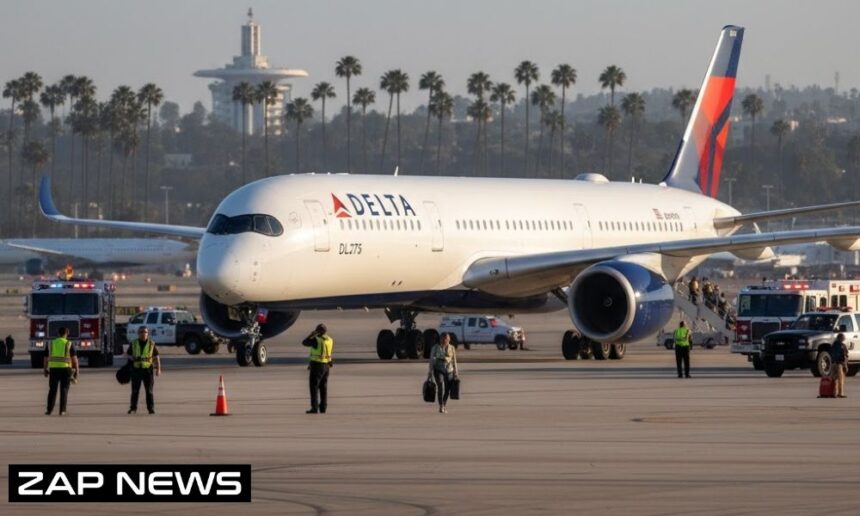
On May 28, 2025, a routine trans-Pacific journey turned into an unexpected but safely executed diversion. Delta Flight DL275, scheduled from Detroit Metropolitan Wayne County Airport (DTW) to Tokyo Haneda Airport (HND), was forced to divert mid-air and land at Los Angeles International Airport (LAX).
The Airbus A350-900, tail number N508DN, a long-range widebody jet equipped with Rolls-Royce Trent XWB engines, experienced a malfunction in its engine anti-ice system over the Bering Sea. Although no emergency was declared, continuing over the Pacific with a compromised anti-ice system posed a potential risk.
The flight crew made the strategic decision to divert to LAX, a Delta hub with advanced technical support and maintenance capabilities. After over 12 hours in the air, the aircraft landed safely at 01:08 AM local time. All passengers and crew were unharmed, and Delta immediately provided support for accommodations, food, and flight rebooking.
This incident quickly drew attention in aviation circles and online forums, becoming a real-world example of airline safety protocols in action.
Overview of Delta Flight DL275
Delta Flight DL275 is a daily international flight connecting Detroit, Michigan, with Tokyo Haneda, one of the busiest trans-Pacific routes. This flight serves business travelers, families, and tourists, providing comfort, reliability, and advanced safety features.
Delta uses the Airbus A350-900 for this route, a modern aircraft known for:
-
Fuel efficiency on ultra-long-haul flights
-
Advanced aerodynamics and safety systems
-
Spacious cabin configurations for business and economy passengers
-
Rolls-Royce Trent XWB engines optimized for performance and reliability
The aircraft in question, N508DN, is among Delta’s newer jets, emphasizing the airline’s commitment to operating modern, safe long-haul aircraft on this critical international corridor.
Timeline of Events Leading to the Diversion
Pre-Departure Delay:
The aircraft had arrived late into Detroit from Amsterdam (DL133), landing at 13:19 local time, only 46 minutes before its scheduled departure to Tokyo. This caused a minor ground delay, and DL275 departed from Gate A46 at 15:53 local time.
In-Flight Issue:
After reaching its cruising altitude of 38,000 feet, the aircraft was flying over the Bering Sea (approx. 620 nautical miles southwest of Anchorage) when the crew detected a malfunction in the engine anti-ice system. This system prevents ice buildup in engine inlets, ensuring proper airflow and engine performance at high altitudes, particularly over cold oceanic air masses.
Diversion Decision:
Given the risk of continuing over the Pacific Ocean with a compromised anti-ice system, the flight crew decided to divert to LAX. While closer airports like Anchorage or Seattle were considered, LAX offered:
-
Full Delta technical teams certified for A350 maintenance
-
Access to specialized parts and equipment
-
Adequate passenger handling and accommodation facilities
-
A widebody-compatible runway for safe landing
Landing:
The flight safely touched down on Runway 06R at 01:08 AM local time, after approximately 12 hours and 15 minutes in the air.
Technical Reasons for Diversion: Engine Anti-Ice System
The engine anti-ice system is critical for:
-
Preventing ice formation on engine nacelles and fan blades
-
Maintaining proper airflow and engine efficiency
-
Reducing the risk of engine damage in high-altitude, cold environments
While a malfunction does not immediately endanger the aircraft, the crew’s decision to divert was precautionary. Over open water, without nearby diversion options, continuing toward Tokyo posed unnecessary risk.
Why LAX Was Chosen Over Other Airports
While Anchorage or Seattle were geographically closer, several factors made LAX the optimal choice:
-
Technical Support: LAX has full Delta maintenance facilities and certified engineers for the Airbus A350.
-
Passenger Care: The airport can accommodate hundreds of international passengers, offering hotels, transport, and rebooking support.
-
Aircraft Capacity: LAX runways and gates can handle widebody aircraft without congestion.
-
Logistics: Passengers can be rebooked to alternative flights efficiently, including onward travel to Tokyo.
This decision demonstrates a balance between safety, logistics, and passenger welfare.
Passenger Experience During the Diversion
Onboard Communication
Passengers reported that the crew remained calm, professional, and communicative throughout the event. Cabin announcements provided regular updates, clarifying that the diversion was precautionary, not an emergency.
Social Media Reactions
Hashtags like #DL275 and #DeltaDivertedLAX trended on X (formerly Twitter), Reddit, and Instagram. Passengers and aviation enthusiasts shared photos, flight tracking screenshots, and their experiences. The majority praised Delta’s transparency and crew professionalism, emphasizing a textbook example of airline safety protocol in action.
Post-Landing Procedures at LAX
Emergency Protocols:
Standard emergency procedures were implemented, including the presence of ground and emergency crews. The aircraft was directed to a remote gate for diagnostics while passengers disembarked safely.
Passenger Support:
Delta provided:
-
Hotel accommodations for overnight stays
-
Meal vouchers and transportation services
-
Rebooking on flights to Tokyo or connecting hubs
Priority was given to passengers with urgent connections or medical needs. Delta’s efficient handling minimized stress for passengers and reinforced trust in the airline.
Aircraft Inspection and Maintenance
After landing, the A350 remained at LAX for 18.5 hours while Delta maintenance crews:
-
Conducted a full inspection of the anti-ice system
-
Verified engine functionality and related components
-
Ensured all safety checks were completed
The issue was confirmed to be isolated. Once cleared, the aircraft returned to service, demonstrating Delta’s rapid and effective technical response.
Similar Diversions That Day
On the same day, other Delta flights were also diverted:
-
DL2346 (LGA→MIA): diverted to JFK due to takeoff noise
-
DL2286 (JFK→ATL): diverted to Charlotte due to cockpit smoke
While unrelated to DL275, these incidents sparked discussions about preventive maintenance and reinforced the importance of real-time operational decision-making.
Aviation Safety Insights
Real-Time Decision Making
The diversion illustrates how crews, airline operations, and air traffic control collaborate in real time to prioritize passenger safety.
Reliability of Modern Aircraft
The Airbus A350-900 is highly reliable, but even advanced aircraft may face technical challenges. DL275 underscores the importance of:
-
Redundant safety systems
-
Well-trained crews
-
Responsive maintenance protocols
Understanding Engine Anti-Ice Systems
Ice buildup can reduce engine performance or cause damage. Hot air from the engine prevents this, and a malfunction triggers a mandatory safety diversion if continuation is risky.
Lessons for Long-Haul Travelers
-
Keep important items accessible: passport, medication, chargers, snacks.
-
Follow crew instructions carefully.
-
Use airline apps like Delta Travel Alerts for updates.
-
Stay calm; diversions often indicate the safety system is functioning as intended.
Media and Industry Reaction
The story was covered by aviation media, including SimpleFlying, FlightAware, and AviationA2Z. Experts highlighted the incident as a real-world case study in airline safety, emphasizing the crew’s decisive action and operational readiness. Online communities praised Delta’s handling as textbook safety-first aviation.
SEO Insights
The keyword “Delta Flight DL275 Diverted LAX” trended due to:
-
Passenger posts on social media
-
Flight tracking and live updates
-
Aviation blog and news coverage
Related search terms included DL275 emergency landing, Delta A350 diversion, and LAX flight diversion, reflecting strong public interest.
Final Thoughts
The Delta Flight DL275 diversion exemplifies how training, advanced aircraft systems, and robust airline protocols work together to ensure passenger safety. While the flight did not reach Tokyo on schedule, the safe landing at LAX, thorough passenger support, and rapid maintenance response reinforce Delta’s commitment to aviation safety.
For travelers, DL275 is a reminder: diversions may disrupt plans, but they exist to protect lives and ensure the highest level of operational safety.
FAQs: Delta Flight DL275 Diverted LAX
Q1: Why did DL275 divert to Los Angeles?
A: A malfunction in the engine anti-ice system required a safe diversion to LAX, which has full Delta maintenance facilities.
Q2: Were passengers hurt?
A: No, all passengers and crew landed safely.
Q3: How long was the flight airborne?
A: About 12 hours and 15 minutes.
Q4: Could the flight have landed elsewhere?
A: Anchorage or Seattle were closer, but LAX offered better technical support and passenger services.
Q5: Did Delta provide assistance after landing?
A: Yes, passengers received hotels, meals, transportation, and rebooking support.
For More Inforamation Visit zapnews.co.uk