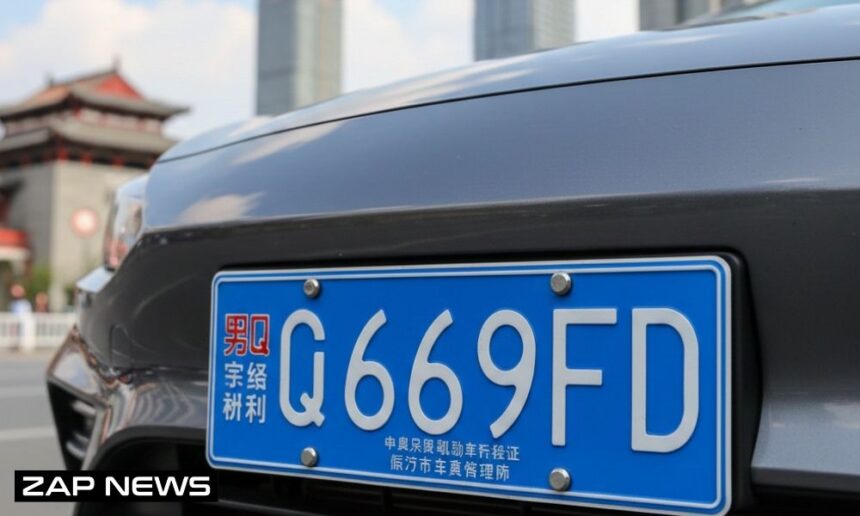
Introduction to 鲁Q 669FD
In modern China, license plates are far more than simple vehicle identifiers. They function as compact records of geography, administration, regulation, and even cultural meaning. Each character and number tells a story—where a vehicle originates, how it is classified, and how it fits into the country’s highly structured transportation system. One plate that often sparks curiosity is 鲁Q 669FD, a seemingly ordinary combination that actually reflects China’s layered approach to mobility, governance, and identity.
This article explores 鲁Q 669FD in depth, explaining how China’s license plate system works, what each part of this specific plate represents, and why such identifiers carry legal, technological, and cultural significance. Whether you are interested in Chinese infrastructure, regional identity, or smart transportation systems, this guide offers a clear and comprehensive understanding.
How China’s License Plate System Works
Standard Plate Structure
Chinese license plates follow a standardized national format designed for clarity and traceability. Each plate begins with a Chinese character that represents the province or autonomous region. This is followed by a Latin letter indicating a city, prefecture, or vehicle category. A sequence of five alphanumeric characters then completes the plate, creating a unique identifier.
In the case of 鲁Q 669FD, the structure reflects this system precisely:
-
鲁 indicates the province
-
Q identifies a specific city or administrative category
-
669FD serves as the vehicle’s unique registration code
This format allows traffic authorities, insurers, and automated systems to instantly interpret essential information.
Role of Alphabetical Codes
The Latin letter following the provincial character plays a critical administrative role. In many provinces, the letter “A” is reserved for the capital city, while subsequent letters represent other cities or special classifications. These letters enable rapid jurisdictional identification, which is especially important for law enforcement and traffic management.
Breaking Down 鲁Q 669FD
鲁 – Provincial Identity
The character 鲁 (Lǔ) is the official abbreviation for Shandong Province, located along China’s eastern coastline. Shandong is one of the country’s most influential provinces, known for its industrial strength, agricultural output, and deep historical roots, including its association with Confucian philosophy.
A vehicle bearing 鲁 instantly signals registration within Shandong’s administrative and legal framework, tying it to a province with advanced infrastructure and dense transportation networks.
Q – City or Classification Marker
The letter Q is commonly associated with Weihai, a coastal city in eastern Shandong. Weihai is recognized for its clean environment, tourism economy, and strategic maritime location. As vehicle ownership grows in such cities, registration codes like “Q” help manage traffic distribution and administrative oversight.
In certain contexts, the letter may also reflect vehicle usage categories, though this depends on provincial regulations. Either way, it narrows the vehicle’s registration origin within Shandong.
669FD – Unique Vehicle Identifier
The final segment, 669FD, distinguishes the vehicle from all others registered under the same regional code. These characters are generally assigned sequentially, though some owners seek specific number combinations due to cultural preferences.
The number 6 is often viewed positively in Chinese culture, symbolizing smooth progress and good fortune. While not always intentional, combinations like “669” may be considered desirable, adding a subtle cultural dimension to an otherwise technical identifier.
Legal Significance of License Plates in China
Registering a vehicle under a plate such as 鲁Q 669FD places it within China’s comprehensive traffic governance system. Registration links the vehicle to:
-
The legal owner
-
Insurance records
-
Inspection and emissions data
-
Traffic violation history
Vehicle owners must comply with annual inspections, mandatory insurance requirements, and emissions regulations. Any transfer of ownership requires formal deregistration and reassignment through official channels, ensuring accountability and transparency.
The Role of License Plates in Enforcement and Safety
Automated Monitoring Systems
China extensively uses Automated License Plate Recognition (ALPR) technology. Cameras positioned on highways, urban intersections, and toll roads scan plates like 鲁Q 669FD in real time. These systems help:
-
Enforce speed limits
-
Identify stolen vehicles
-
Manage toll payments
-
Track traffic flow patterns
This automation allows for efficient enforcement while reducing reliance on manual checks.
Insurance and Accident Handling
In the event of an accident, the license plate becomes the primary reference for verifying insurance coverage and ownership. Insurance companies link policies directly to plate numbers, streamlining claims and liability assessments.
Cultural Meaning and Social Perception
Numbers as Symbols
In Chinese culture, numbers are rarely neutral. Certain digits carry symbolic weight:
-
6 suggests smoothness and success
-
8 is associated with wealth
-
9 symbolizes longevity
A plate like 鲁Q 669FD may be perceived as auspicious, even if the assignment was random. This belief has fueled demand for “lucky” plates, some of which are auctioned at premium prices.
Regional Pride
License plates also serve as markers of regional identity. Drivers often feel a strong connection to their province or city, and the characters on a plate act as mobile symbols of origin. Seeing 鲁 on the road instantly signals Shandong roots, evoking shared culture and regional familiarity.
Technology, Smart Cities, and 鲁Q 669FD
Integration with Smart Infrastructure
In smart city environments, license plates interact with intelligent systems that manage parking, congestion pricing, and traffic signals. A plate like 鲁Q 669FD may automatically trigger:
-
Parking access
-
Electronic toll collection
-
Traffic flow adjustments
These systems rely on accurate plate data to function seamlessly.
Data Privacy Considerations
While plate recognition enhances efficiency, it also raises privacy concerns. Chinese regulations restrict access to detailed ownership data, limiting it to authorized institutions. For the general public, a plate number alone does not reveal personal information.
Environmental Policies and Vehicle Registration
China’s push toward sustainability has made license plates essential tools for enforcing environmental policies. Vehicles are categorized by emission standards, and registration numbers are used to:
-
Enforce driving restrictions on high-pollution days
-
Apply low-emission zone rules
-
Monitor compliance with green vehicle initiatives
Plates like 鲁Q 669FD thus play a role in broader environmental governance.
Clearing Up Common Misconceptions
There are several myths surrounding specific license plates:
-
鲁Q 669FD is not a military or police plate
-
It does not indicate government privilege
-
Ownership details are not publicly accessible
It is simply a standard civilian or commercial registration within China’s regulated system.
Conclusion
Although it may appear ordinary, 鲁Q 669FD encapsulates a complex intersection of administration, culture, technology, and regulation. From identifying a vehicle’s provincial roots to enabling smart-city infrastructure and environmental compliance, each element of the plate serves a purpose. Understanding how plates like 鲁Q 669FD function offers valuable insight into how China organizes mobility, enforces accountability, and embeds cultural meaning into everyday systems. In this way, a simple license plate becomes a symbol of modern governance on the move.
FAQs About 鲁Q 669FD
What does 鲁Q 669FD indicate?
It identifies a vehicle registered in Shandong Province, typically linked to Weihai, with a unique serial number.
Can civilians look up owner information?
No. Detailed ownership data is accessible only to authorized authorities.
Is 鲁Q a special government designation?
No. It usually represents a standard city or registration category within Shandong.
Why do some plates seem more valuable than others?
Cultural beliefs about lucky numbers increase demand for certain combinations.
Does the plate affect where the vehicle can drive?
Yes. Emission rules and regional restrictions may be enforced using plate data.
For More Inforamation Visit zapnews.co.uk